Mostrar mensagens com a etiqueta livros edição limitada. Mostrar todas as mensagens

24.7.25

Livros sobre música que vale a pena ler - Cromo #117: José António Moura - "Cadernos De Divulgação - Teoria E Prática 1.2"


autor: José António Moura
título: Cadernos De Divulgação - Teoria E Prática 1.2
editora: Marte Instantânea
nº de páginas: 100
isbn: N/A
data: 2024
1ª Edição - Primeira tiragem de 60 exemplares


P2

THE SOUND OF THE DRUM

DRIVES OUT THOUGHT. FOR

THAT REASON IT IS THE

MOST MILITARY OF INSTRUMENTS.


P3

«Querem discorrer sobre o slogan ‘Conformar Para Desformar’?


Não, isso foi o Stevo… não tem nada a ver connosco! Isso foi uma coisa que lixou tantas bandas. Tantas bandas disseram ‘Temos óptimas ideias, vamos ser mesmo diferentes e vamos mudar as atitudes das pessoas… mas o que faremos é seguir a norma, conseguir que as pessoas se interessem e depois então desviá-las’. Em 90% dos casos, as pessoas que se conformam nunca chegam à fase do desvio porque têm de manter o seu público. A noção de ‘Conformar Para Deformar’ é maioritariamente uma treta.»


Stephen Mallinder (Cabaret Voltaire) em conversa com Richard Jevons para a revista Overground, 1984


«O prazer é uma coisa que o escuro não tem. Tem doer; faz doer. A música do escuro é o som de um sofrimento que se ouve e se condói consigo mesmo. Não fala da simples tristeza, do arrependimento, da chuva, do Outono no coração. Não fala – grita. Grita para que doa ouvir o grito do que lhe dói. Como as imagens de uma morte alheia, no grão intocável de um «écran» de televisão. E deste escuro, deste desespero que não se conteve, nenhuma luz, nenhuma saída se consente ou espera.»


Miguel Esteves Cardoso, “A Noite Nacional”, jornal Blitz, 19 de Novembro 1985


Todas as imagens digitalizadas para escala de cinza a partir de objectos de arquivo pessoal.


José António Moura: textos (excepto onde creditado ou óbvio), recolha e manipulação de imagens, composição gráfica, paginação, tradução, revisão (assistida por Pedro Santos).


Na face: Rascunho de carta para Mike Keane (Royal Family And The Poor), 1988.

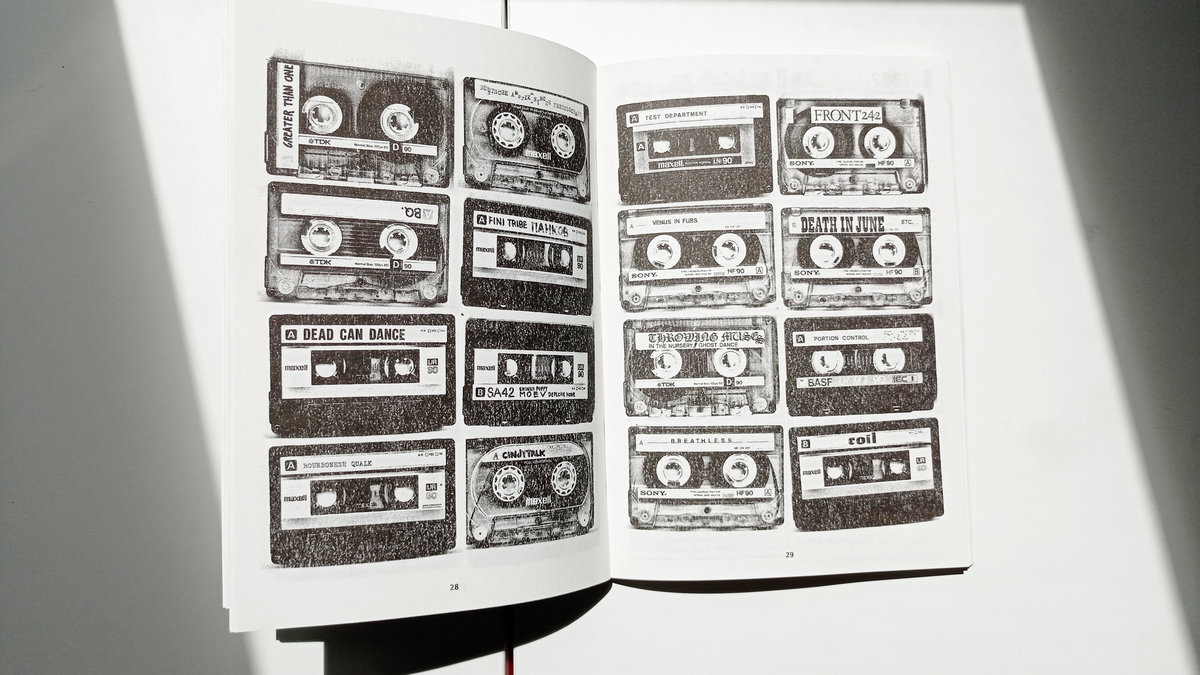
Página 2: Cassette Ecstasy Under Duress (Test Dept, 1984).

Página 99: Composição a partir do papel de carta da Antler Records.

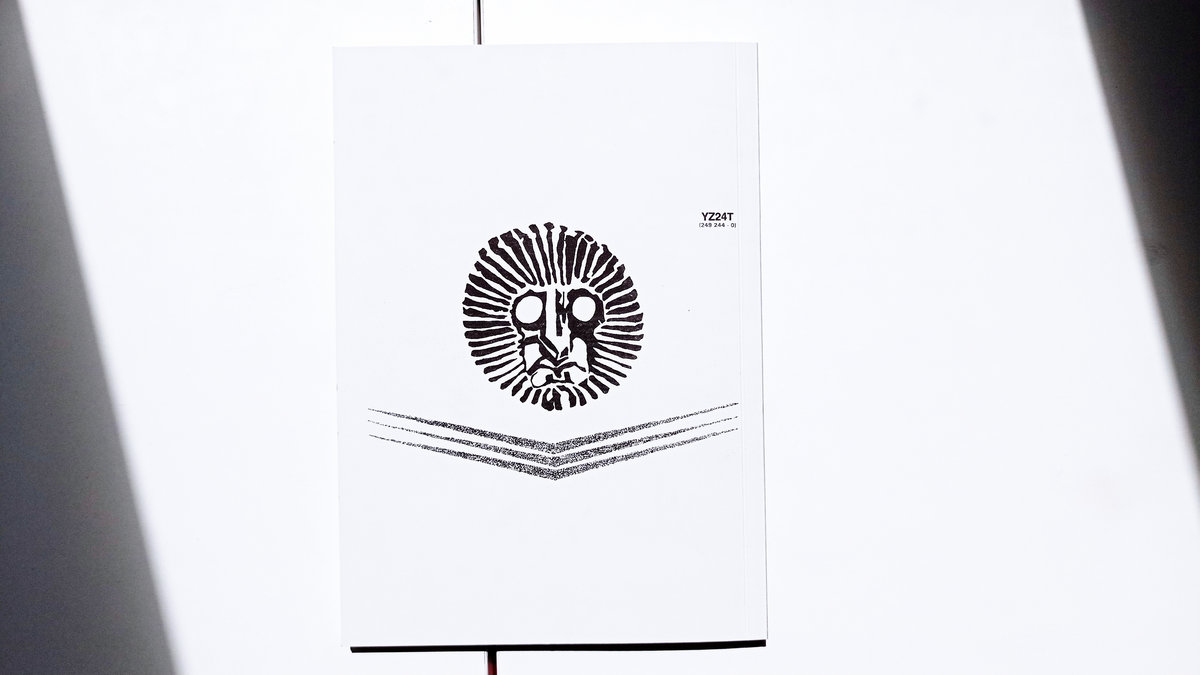
No verso: 12” Junk Funk (SPK, 1984).


Impresso em risografia no estúdio DESISTO. Primeira tiragem de 60 exemplares.


Marte Instantânea, 2024.


P4

Imagem dos TEST DEPT.

(tirar foto)


P5 col. 1

Páginas de texto e imagens que assinalam muitos anos de divulgação de música. Demonstra-se como, a partir da perspectiva de fã, se circula para outros papéis mais activos. Nada se inventa, propriamente, mas tudo se ergue do nada. Como em outros percursos, são as ligações que se fazem que identificam a personalidade, são as escolhas de umas coisas em detrimento de outras, incontáveis vezes, que distinguem o nosso percurso de outros. Curiosidade, anotações, cópia, iniciativa e aprendizagem com quem já fazia o mesmo. Benefício da generosidade de pessoas que abriram portas, facilitaram contactos, gravaram e emprestaram música, deram oportunidades. Sem elas, tudo seria mais difícil e menos interessante.


O arquivo espelha o percurso e as sensações com bastante evidência e, por isso, o texto está ao seu serviço, não funciona em autonomia nem se reclama biográfico. Por isso, também, encontra-se fragmentado de acordo com a sequência cronológica / temática das imagens, frequentemente como legenda. Ainda assim, espera-se fluído e suficientemente elucidativo. 

Absorver informação e reflectir sobre ela. Comunicá-la. A sua música e os discos continuavam a dar formação artística, social e política. Rasto de cassettes bem importante para primeiras abordagens, uma verdadeira fundação para o trabalho de divulgação. A correspondência com artistas e editoras, iniciada em 1987, começa neste número a ser apresentada de forma a completar a narrativa. A apresentação não é sempre integral mas sobretudo focada em certos assuntos relacionados com histórias pessoais, iluminação de algum detalhe técnico interessante ou pormenor histórico inserido na cena portuguesa da época. Este património segue em edições seguintes dos Cadernos.


P5 col. 2

PARTE 3

Test Dept, SPK, cassetes, correspondência, Antler, Siglo XX, The Klinik, Vomito Negro, Interrail, Electronic Body Music, etc.

Assumida a opção estética principal no gosto e na divulgação, passagem para a experiência imersiva da documentação, conhecimento, descoberta do que parecia estar do outro lado da camada de verniz que reveste a realidade consensual. Uma certa reprogramação. Escola do submundo. Contactar com aspectos feios, violentos, reprimidos na sociedade. Questionar a “normalidade”.

Muito novo para viver Throbbing Gristle e a sua doutrina de subversão do Normal, abracei com entusiasmo outros grupos com teoria suficiente sobre assuntos controversos e/ou com carga política. Na geração seguinte, Neubauten pareciam bastante directos, a sua acção e a sua música eram o programa, mas Test Dept e SPK, por exemplo, geravam explicitamente mensagens de (re)acção, revolta e esclarecimento através de textos e frases nos discos. Alguma dessa informação foi apanhada a posteriori para enriquecer programas de rádio ou textos publicados. O primeiro contacto com essas bandas foi através de cassetes gravadas com os discos. O som bateu primeiro, só depois a teoria.

A prolongada luta dos mineiros ingleses em 1984-85 gerou música de apoio e comentário sócio-político, desde a via mais tradicional de Billy Bragg ao acompanhamento electrónico de Robert Calvert (Hawkwind) e As tácticas de choque dos Test Dept. Estes últimos representavam na ideologia mas também no som o combate das classes trabalhadoras na indústria pesada. Simbolicamente, gravaram um álbum com o coro de mineiros grevistas do sul do País de Gales (Shoulder To Shoulder, 1985) mas foi em The Unacceptable Face Of Freedom (1986) que o grupo melhor expressou artisticamente a sua posição política na questão dos mineiros e outras preocupações socio-políticas da época.

A entrada no disco foi imediata, o espírito ficou cativo. Aprender sobre a luta dos mineiros em Inglaterra, quem era Enver Hoxha, tentar entender e descodificar os excertos de rádio ou TV incluídos no álbum, “The Crusher” e “Fist” como veículos de adrenalina. Saber mais para transmitir mais. Depois, descobrir que metade do single de estreia de Test Dept (Compulsion, 1983) era produção Kirk / Mallinder (Cabaret Voltaire). Beating The Retreat mais rude, sombrio, fetichista – “Sweet Sedation” com batida 4/4 que, passados 20 anos, se misturava com techno, e a voz irada que suplantava Nitzer Ebb; “Total State Machine” como protótipo da percussão industrial em forma catártica, energizante; “Spring Into Action” como comando para agir. Ecstasy Under Duress, o entusiasmo na adversidade e um monte de postais evocativos da onda. Tudo reforçado na imaginação, com o corpo a seguir em privado.

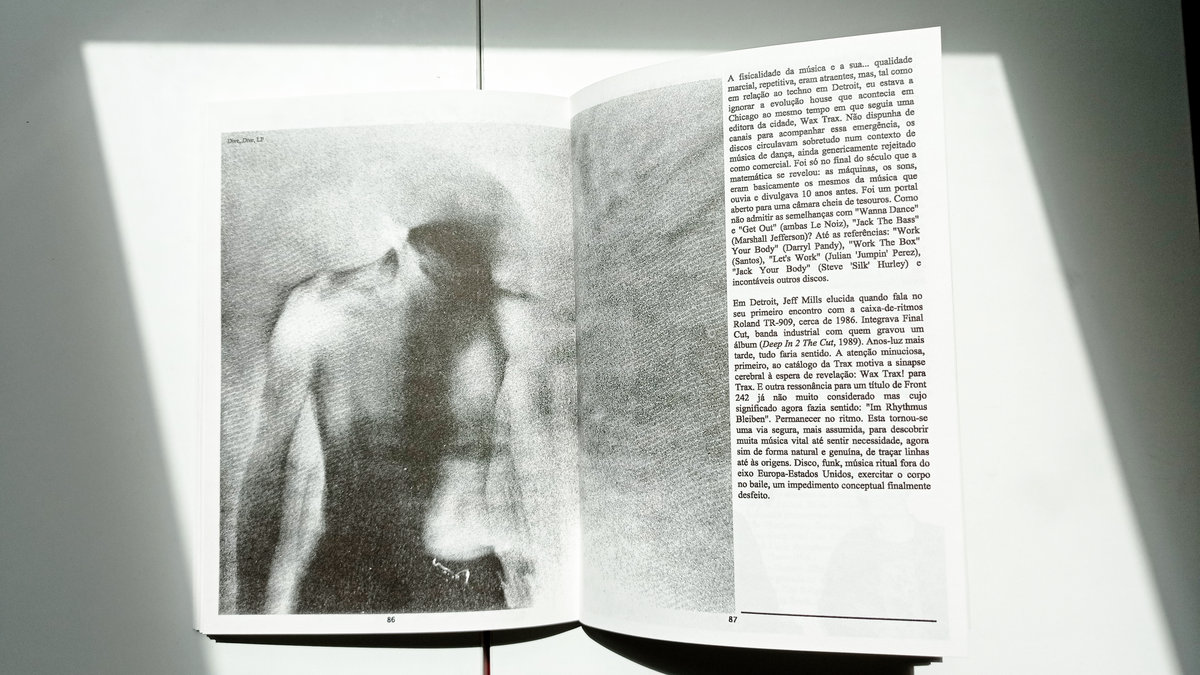
Ainda sobre The Unacceptable Face Of Freedom, em artigo pára o Blitz n.º 90, (22 de Julho de 1986), Ricardo Saló descrevia «a sensação que, uma vez por outra, todos nós experimentamos quando se nos depara um disco cuja superioridade nos esmaga, deixando-nos tragicamente a meio caminho entre a impotência para desencadear uma abordagem sabida e a recusa de lhe tocarmos sequer com as pontas do dedos com receio que isso possa perturbar a sua imaculada perfeição. (…) Que corpos estranhos são estes que tão superiormente se borrifam para a música tal como a conhecemos e – pior ainda – a respeitamos?» Conseguem-nos «deixar a pensar como teria sido o Triunfo da Vontade se realizado por Eisenstein no cenário de Metropolis.»


THERE IS A HAIL OF EVENTS UNDER WHICH EVERY PERSON STANDS UNSHELTERED, UNABLE TO COMMAND THE STORM’S WITHDRAWAL. WHAT MINOR PROTECTIONS WE CONSTRUCT ARE EPHEMERAL, SHACKS AGAINST THE CONSTANT ONSLAUGHT. I HAVE NO PACIFIST’S DREAM OF MUSCLE. ACTION MUST BE ANSWERED BY BETTER ACTION. DECONSTRUCTION BY CONSTRUCTION. WHEN THE ENEMY ATTACKS YOU MUST INDUCE HIM TO TURN THE WEAPON AGAINST HIMSELF. ALL THE POWER WHICH STANDS AGAINST YOU IS YOUR POTENTIAL POWER AGAINST WEAKNESS BECOMES POWER AGAINST POWER; RUNNING FOR COVER IS NO SOLUTION. SAFETY CAN ONLY BE ACHIEVED BY TURNING THE STORM BACK ON IT SELF.

Test Dept, Beating The Retreat, 2LP


Cadernos de Divulgação 1.2

from Marte Instantanea

Book/Magazine

A5, 100 páginas, escala de cinza, impressão em risografia, papel de textura rude, lombada segura.

Terceiro capítulo de uma série em progresso. Conhecer processos de divulgação de música através de arquivos de gente que o faz (ou fez) com suficiente dedicação e atenção às margens. Os "Cadernos de Divulgação" não terão regularidade assente e pretendem documentar actividades e artefactos resultantes da vontade em divulgar música num país largamente periférico em relação às principais e mais excitantes movimentações do mercado e da imprensa. Por onde se começava? Como se fazia? Com que se fazia? E o que se fazia?

Nesta edição, fase de contacto com discurso político, social e psicológico, portas para um submundo de resistência e denúncia do socialmente seguro e instituído. Muita teoria consumida. Início sério de correspondência com artistas e editoras.

Série com numeração 1 entregue a José Moura, um dos sócios co-fundadores da Flur (www.flur.pt), Holuzam (holuzam.bandcamp.com), Príncipe (principediscos.bandcamp.com), também parte de Major Eléctrico e outras estruturas / equipas mais ou menos duradouras desde a década de 1980. DJ, artista sonoro com CDs editados, fez rádio, escreveu, entrevistou, programou, coleccionou, arquivou, inventou, experimentou, vendeu discos, desenhou flyers, fez a editora Marte Instantânea em 2020 e é no simbolismo desse selo que se lançam os "Cadernos de Divulgação".

---

A5, 100 pages, greyscale, risograph print, rough textured paper, solid spine, Portuguese language.

Part three in a series dedicated to the act of divulging music, based on physical archives kept by people who did it with enough dedication in a country (Portugal) always largely on the periphery of the most interesting scenes and press. Where to start? And how? With what? And doing exactly what?

In this issue: a period of contact with political, social and psychological discourse, open doors to an underworld of resistance to the socially safe and established. A lot of theory was consumed. Also, the beginning of serious correspondance with artists and labels.


Issue 1.2 continues to focus on the archives of José Moura, co-founder of Flur (www.flur.pt), Holuzam (holuzam.bandcamp.com), Príncipe (principediscos.bandcamp.com), also part of Major Eléctrico and other structures/teams since the 1980s. DJ, sound artist with 2 CD releases (Discmen at soundcloud.com/discmen), he was a radio host, wrote about music, interviewed people, programmed, collected, archived, invented, experimented, sold records, designed flyers, did the Marte Instantânea label in 2020. Most of the activities described above are still ongoing. 
  less

Sold Out


28.3.25

Livros sobre música que vale a pena ler - Cromo #116: José António Moura - "Cadernos De Divulgação - Teoria E Prática 1.3"


autor: José António Moura
título: Cadernos De Divulgação - Teoria E Prática 1.3
editora: Marte Instantânea
nº de páginas: 100
isbn: N/A
data: 2024
1ª Edição - Primeira tiragem de 50 exemplares


CADERNOS DE DIVULGAÇÃO

TEORIA E PRÁTICA 1.3


Capa:

DIFFERENCE.

DIFFERENCE IS A FIGHT.

WE FIGHT AGAINST THAT WORLD.

THIS WORLD.


A BAND.

NOT LIKE OTHER BANDS.

THEY WANT TO SAY SOME THINGS.

TO EXPRESS THEIR DEEP FEELINGS.

THEY WANT TO SPEAK TO YOU.

TO MAKE YOU FEEL THEIR HEART BEATING.

FEEL IT NOW.

LISTEN TO à;GRUHM…

NOW.


Verso da capa:

No Dread In Your Mind


Contracapa:

BRAINWAR DANCE


Todas as imagens digitalizadas para escala de cinza a partir de objectos de arquivo pessoal.

José António Moura: textos (excepto onde creditado ou óbvio), recolha e manipulação de imagens, composição gráfica, paginação, tradução, revisão (assistida por Pedro Santos.

 Na face: Folha de promoção de à;GRUHM…

Página 2: «No Dread In Your Mind», escrito no verso de uma carta de Hartmut Runge.

Página 99: Um dos vários logos usados em cartas de Suicide Commando.

Verso: Logo da editora Brainwar / Carta escrita por Johan Van Roy (Suicide Commando), 1992

 Impresso em risografia no estúdio DESISTO.

Primeira tiragem de 50 exemplares.

 Marte Instantânea, 2024


Páginas de texto e imagens que assinalam muitos anos de divulgação de música. Demonstra-se como, a partir da perspectiva de fã, se circula para outros papéis mais activos. Nada se inventa, propriamente, mas tudo se ergue do nada. Como em outros percursos, são as ligações que se fazem que identificam a personalidade, são as escolhas de umas coisas em detrimento de outras, incontáveis vezes, que distinguem o nosso percurso de outros. Curiosidade, anotações, cópia, iniciativa e aprendizagem com quem já fazia o mesmo. Benefício da generosidade de pessoas que abriram portas, facilitaram contactos, gravaram e emprestaram música, deram oportunidades. Sem elas, tudo seria mais difícil e menos interessante.


O arquivo espelha o percurso e as sensações com bastante evidência e, por isso, o texto está ao seu serviço, não funciona em autonomia nem se reclama biográfico. Por isso, também, encontra-se fragmentado de acordo com a sequência cronológica / temática das imagens, frequentemente como legenda. Ainda assim, espera-se fluído e suficientemente elucidativo.


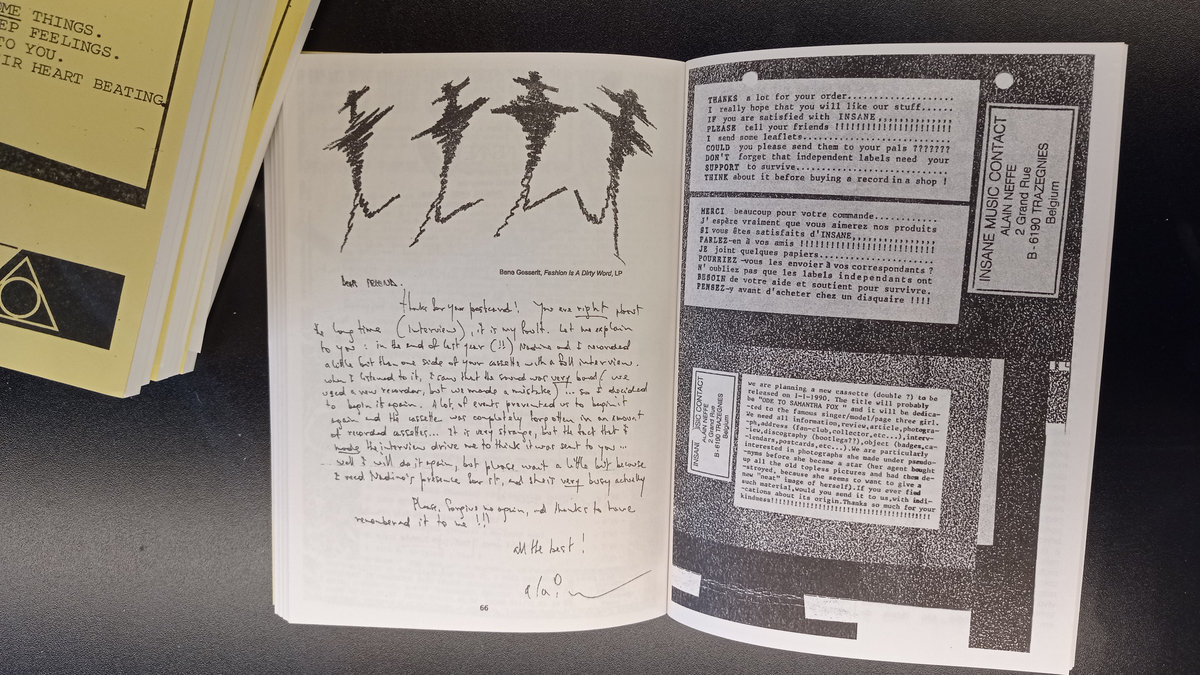
Mais correspondência belga a misturar informação e foro pessoal, a vontade em interagir e opinar. Nesta edição, comendo substancial da narrativa entregue às próprias cartas reproduzidas em parte ou por inteiro, uma vez que estas contam histórias e revelam detalhes sobre música específica de quem as escreveu e sobre o funcionamento do circuito. Como tal, eram ferramentas de aprendizagem que acrescentavam valor à actividade de divulgação.


Cadernos de Divulgação 1.3

from Marte Instantanea

Book/Magazine


A5, 100 páginas, escala de cinza, impressão em risografia, papel de textura rude, lombada segura.

Quarto capítulo de uma série em progresso. Conhecer processos de divulgação de música através de arquivos de gente que o faz (ou fez) com suficiente dedicação e atenção às margens. Os "Cadernos de Divulgação" não terão regularidade assente e pretendem documentar actividades e artefactos resultantes da vontade em divulgar música num país largamente periférico em relação às principais e mais excitantes movimentações do mercado e da imprensa. Por onde se começava? Como se fazia? Com que se fazia? E o que se fazia?

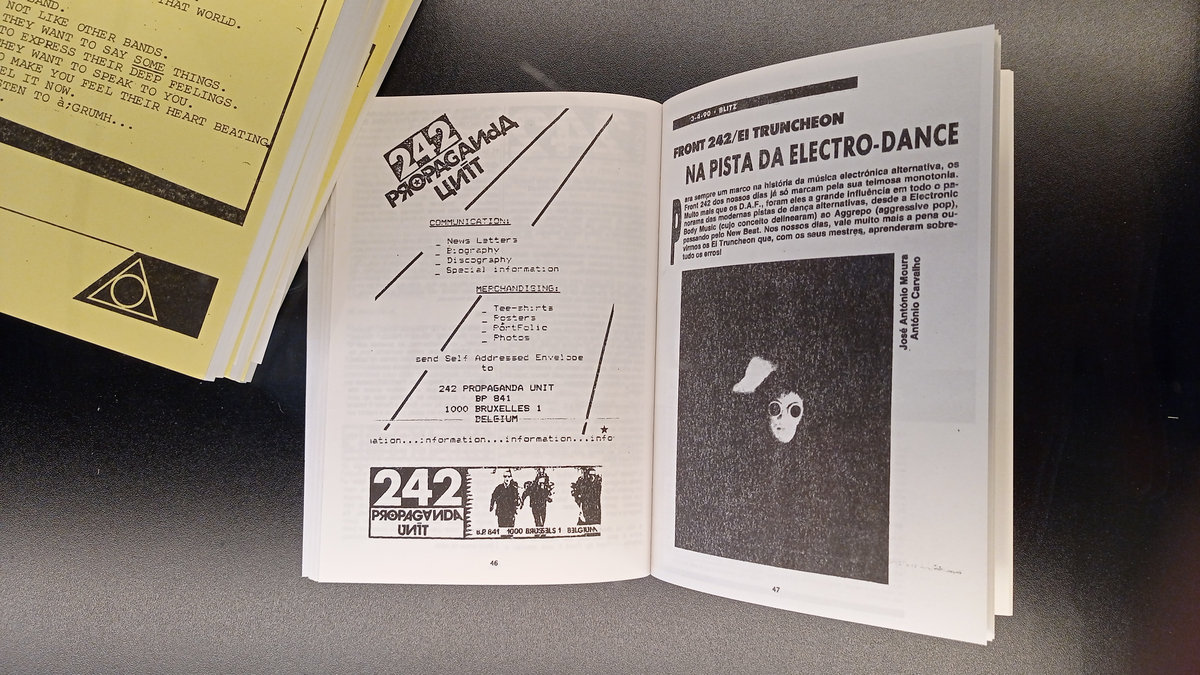
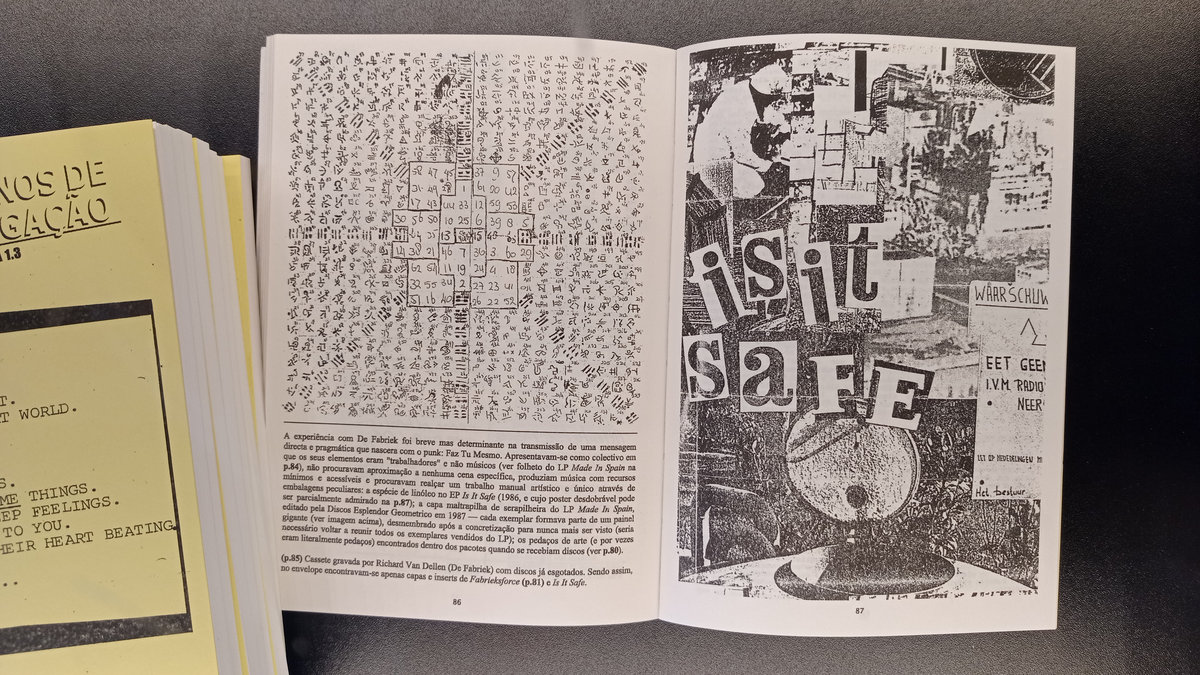
Nesta edição, regularidade de correspondência com parte considerável do underground belga (Climax Productions, Liquid G., E!Truncheon, Front 242, Suicide Commando, à;GRUMH..., Insane Music), incluindo duas editoras que rapidamente dele sairam (Antler e KK Records). Daí para De Fabriek, Esplendor Geometrico e uma visão geral do tom da correspondência, os assuntos abordados, a experiência a construir-se de improviso e uma rede de contactos a tornar a actividade de divulgação mais definitiva.

Série com numeração 1 entregue a José Moura, um dos sócios co-fundadores da Flur (www.flur.pt), Holuzam (holuzam.bandcamp.com), Príncipe (principediscos.bandcamp.com), também parte de Major Eléctrico e outras estruturas / equipas mais ou menos duradouras desde a década de 1980. DJ, artista sonoro com CDs editados, fez rádio, escreveu, entrevistou, programou, coleccionou, arquivou, inventou, experimentou, vendeu discos, desenhou flyers, fez a editora Marte Instantânea em 2020 e é no simbolismo desse selo que se lançam os "Cadernos de Divulgação".


15.4.24

Livros sobre música que vale a pena ler - Cromo #109: José António Moura - "Cadernos De Divulgação - Teoria E Prática 1.1"


autor: José António Moura
título: Cadernos De Divulgação - Teoria E Prática 1.1
editora: Marte Instantânea
nº de páginas: 100
isbn: N/A
data: 2023
1ª Edição - Primeira tiragem de 70 exemplares


Capa:

Cadernos De Divulgação

Teoria e Prática 1.1


Pg. 3

«Tem de se viajar bastante ou mudar para outro local para se apreciar plenamente tudo o que a vida tem para oferecer. Também tem de se envelhecer. A idade e a perspectiva têm uma maneira de remodelar continuamente a nossa narrativa pessoal. As perspectiva mudam, tal como os modos como vemos a história. Quando se tenta seguir uma linha, pertencer – estás a tentar ser como toda a gente, mas és uma criança. Não tens dinheiro, mas tens capacidade de acção.»

Jon Winfield Nicholson (S.S.P.S.), The Life And Times Of Gigi Black, 2023

 -----------------------

 Todas as imagens digitalizadas para a escala de cinza a partir de objectos de arquivo pessoal.

 José António Moura: textos (excepto onde creditado ou óbvio), recolha e manipulação de imagens, composição gráfica, paginação, tradução, revisão (assistida por Pedro Santos).

 Na face: Aspecto de Aqua Regis / Panic / Tainted Love (Coil, 1985).

Página 2: Composição a partir de capa de Dirtdish (Wiseblood, 1987).

Página 99: The Unacceptable Face of Freedom, LP (Test Dept., 1986).

No verso: Composição a partir das capas de That Total Age (Nitzer Ebb, 1987), Come Before And Murder Love (Death In June, 1985), Shoulder To Shoulder (Test Dept., 1985).

 Impresso em risografia no estúdio DESISTO. Primeira tiragem de 70 exemplares.

 Marte Instantânea, 2023

 Pg. 4

(em baixo) ID de todas as emissões do Refúgio.

- 01: Normal.

- 02: Normal.

- 03: Mini-destaque para instrumentais.

- 04: Normal.

- 05: Normal.

- 06: Passatempo com oferta de 3 postais de bandas.

- 07: Normal.

08: Normal.

- 09: Primeira emissão com 2 horas. Rodagem integral – The Hollow Men – Tales Of The Riverbank.

- 10: Rodagem integral – The Legendary Pink Dots – Island Of Jewels. Mini-destaque “música pesadona”.

-11: Rodagem integral – Chumbawamba – Pictures Of Starving Children Sell Records.

- 12: Rodagem integral – Coil – Horse Rotorvator.

- 13: Rodagem integral – Stockholm Monsters – Alma Mater.

- 14: Rodagem integral – Trisomie 21 – Chapter IV.

- 15: Rodagem integral Venus In Furs – Real More Fibre.

- 16: Destaques Play It Again Sam ! e Siglo XX.

- 17: Destaque Einstürzende Neubauten. Porcópia 1.

- 18: Mini-destaque Skinny Puppy. Porcópia 2.

- 19: Mini destaque Princess Tinymeat. Porcópia 3.

- 20: Especial Electrónica 1 (mini-destaque Neon Judgement). Porcópia 4.

- 21: Especial Electrónica 2 (Front 242). Porcópia 5.

- 22: Especial obscuro e fúnebre (mini-destaque Clair Obscur). Porcópia 6.

- 23: Destaque Poésie Noire. Porcópia 7.

- 24: Emissão fúnebre parte II. Porcópia 8.

- 25: Destaque In The Nursery. Histórias e Poesia. Porcópia 9.

- 26: Telefonemas falsos. Porcópia 10.

- 27: Especial Siglo XX.

- 28: Normal.

- 29: Especial Antler Records.

- 30: Especial Clan Of Xymox.

- 31: Destaques Bourbonese Qualk e The Klinik. Balanço 1987. Passatempo com oferta de autocolantes.

- 32: Normal.

- 33: Normal.

- 34: Normal.

35: Skinny Puppy – história e discografia. Agradecimentos 1987.

- 36: Priemira emissão aos Domingos, regresso a 1 hora (19h-20h). Spoken word misturado com música.

- 37: Spoken word misturado com música.

- 38: Spoken word misturado com música.

- 39: Especial industrial / pós-industrial.

- 40: Normal.

- 41: Normal.

- 42: Normal.

- 43: “Da submersão dos ecos à exumação dos sons”.

- 44: “Exaltação ao ruído”.

- 45: Normal.

- 46: Normal.

- 47: Normal.

- 48: Normal.


Páginas de texto e imagens que assinalam muitos anos de divulgação de música. Demonstra-se como, a partir da perspectiva de fã, se circula para outros papéis mais activos. Nada se inventa, propriamente, mas tudo se ergue do nada. Como em outros percursos, são as ligações que se fazem que identificam a personalidade, são as escolhas de umas coisas em detrimento de outras, incontáveis vezes, que distinguem o nosso percurso de outros. Curiosidade, anotações, cópia, iniciativa e aprendizagem com quem já fazia o mesmo. Benefício da generosidade de pessoas que abriram portas, facilitaram contactos, gravaram e emprestaram música, deram oportunidades. Sem elas, tudo seria mais difícil e menos interessante.

O arquivo espelha o percurso e as sensações com bastante evidência e, por isso, o texto está ao seu serviço, não funciona em autonomia nem se reclama biográfico. Por isso, também, encontra-se fragmentado de acordo com a sequência cronológica / temática das imagens, frequentemente como legenda. Ainda assim, espera-se fluído e suficientemente elucidativo.

O benefício da perspectiva possibilita o olhar crítico actual, utilizado com medida, sem desmanchar os avanços originais.

Fetiche na apresentação quase integral das folhas de emissão e textos de apoio para o programa de rádio Refúgio, documentando sem filtro o trabalho, erros e pequenos apontamentos do momento. Para orientação técnica no decorrer das emissões, os formatos eram escritos à frente de cada título. Regra geral, as imagens ilustram nomes nas playlists e provêm de discos que, na época, rodavam essencialmente em cassete,


PARTE 2

Rádio Urbana, Antler, Bourbonese Qualk, In The Nursery, Poésie Noire, Princess Tinymeat, Flux, Skinny Puppy, Perennial Divide, Sisterhood, Xymox, Gouldthorpe & Hinkler, playlists, etc.


Primavera 1987. Idade: 18 Anos. Refúgio foi nome de programa de rádio semanal, Sábados à noite, duração de uma hora. Acontecia na Rádio Urbana (105.4 FM), em Almada, que ocupava uma loja no Centro Comercial M. Bica. Contacto feito através de uma amigo (Fernando Ferreira) que na rádio já fazia a Zona Informática. O genérico do Refúgio começou por ser Mike Oldfield, “The Trap”, depois assentou em Coil, “Clap”. Divulgação de discos comprados e muitos outros gravados em cassete por amigos e colegas. Mais tarde, também discos promocionais enviados por editoras e artistas que se contactavam por carta. Emissões em co-apresentação com Pedro Caiola.

A partir da emissão 9, o programa passa a ter 2 horas. Inicialmente, por falta de discos suficientes, adopta-se na segunda hora a rodagem integral de um álbum. Começam também a ser feitos destaques mais longos a bandas, editoras ou géneros. A partir da emissão 17, Pedro Caiola escrevia e lia ao microfone o folhetim “Os Traumas de Porcópia Apaixonada”. Postura artística própria do tempo, complemento ‘intelectual’ para a música. Durou 10 episódios. A partir da emissão 36, regresso ao formato de uma hora apenas e em novo dia e horário: Domingos, 19-20h. Última emissão registada na Rádio Urbana é a n.º 48 em 10 de Março de 1988. Nos primeiros meses, necessidade de escrever quase todas as intervenções ao microfone. Amadorismo e ingenuidade frequentes nos textos, as tentativas de aligeirar com humor o facto de a música ser frequentemente agressiva ou difícil. Ainda, erros na informação decorrentes da falta de fontes, fraqueza que viria progressivamente a melhorar com os contactos directos com publicações, artistas e editoras


24.1.24

Livros sobre música que vale a pena ler - Cromo #106: José António Moura - "Cadernos De Divulgação - Teoria E Prática 1.0"


autor: José António Moura
título: Cadernos De Divulgação - Teoria E Prática 1.0
editora: Marte Instantânea
nº de páginas: 100
isbn: N/A
data: 2023
1ª Edição - Segunda tiragem de 20 exemplares


Cadernos De Divulgação

Teoria E Prática 1.0


Música


«Abaixo dos sons e dos ritmos, a música opera sobre um terreno bruto, que é o tempo fisiológico do ouvinte; tempo irremediavelmente diacrónico porque irreversível, da qual ela transmuta, no entanto, o segmento que foi consagrado a escutá-la numa totalidade sincrónica e fechada sobre si mesma. A audição da obra musical, em razão da sua organização interna, imobiliza, portanto, o tempo que passa; como uma toalha fustigada pelo vento, atinge-o e dobra-o. De modo que ao ouvirmos música, e enquanto a escutamos, atingimos uma espécie de imortalidade.

Mas, além do tempo psicológico, a música se dirige ao tempo fisiológico e até visceral, que a mitologia certamente não ignora – já que uma história contada pode ser “palpitante” – sem que o seu papel seja tão essencial quanto na música; todo contraponto proporciona aos ritmos cardíaco e respiratório um lugar silencioso.


Mas o facto de a música ser uma linguagem – por meio da qual são elaboradas mensagens, das quais pelo menos algumas são compreendidas pela imensa maioria, ao passo que apenas uma ínfima minoria é capaz de emiti-las, e de, entre todas as linguagens, ser esta a única que reúne as características contraditórias de se ao mesmo tempo inteligível e intraduzível – faz do criador de música um ser igual aos deuses, e da própria música, o supremo mistério das ciências do homem, contra o qual elas esbarram, e que guarda a chave do seu progresso.»

Claude Lévi-Strauss, O Cru e o Cozido, 1964

Tradução de Beatriz Perrone-Moisés


Todas as imagens digitalizadas para escala de cinza a partir de objectos de arquivo pessoal.

José António Moura: textos (excepto onde creditado ou óbvio), recolha e manipulação de imagens, composição gráfica, paginação, tradução e revisão (assistida por Pedro Santos).

Na face: Aspecto de “Science Fiction”, óleo de Abel Mendes reproduzido na capa de Anar Band.

No verso: Aspectos das capas de DMM Mega Mixes (Duran Duran) e W.O.R.K. (Bow Wow Wow).

Impresso em risografia no estúdio DESISTO. 

Segunda tiragem de 20 exemplares.

Marte Instantânea, 2023.

100 páginas


8.6.23

Livros sobre música que vale a pena ler - Cromo #99: "Bone Music"


autor: Stephen Coates
título: Bone Music
editora: Strange Attractor Press
nº de páginas: 156
isbn: 9781913689476
data: 2022
1ª Edição / 1st Edition

Há uma versão paperback ilimitada, e uma versão hardback, limitada a 350 exemplares e assinada pelo autor, que é a que tenho:
– Includes exclusive risograph print and 7" flexidisc of 1930s Soviet dissident music off the bone.
(ver pormenores aqui: https://strangeattractor.greedbag.com/buy/bone-music/ e aqui: https://www.discogs.com/release/25139482-Various-Bone-Music)


BONE MUSIC

WRITTEN BY STEPHEN COATES.

PUBLISHED BY STRANGE ATTRACTOR PRESS IN 2022, IN AN UNLIMITED PAPERBACK EDITION AND LIMITED HARDBACK EDITION.

TEXT © STEPHEN COATES 2022

ORIGINAL PHOTOGRAPHS BY PAUL HEARTFIELD.

DESIGN BY TIHANA SARE, LETTERFORMAGIC.COM.

ISBN: 9781913689476

STEPHEN COATES HAS ASSERTED HIS MORAL RIGHT TO BE IDENTIFIED AS THE AUTHOR OF THIS WORK IN ACCORDANCE WITH THE COPYRIGHT, DESIGNS AND PATENTS ACT. 1988.

DISTRIBUTED BY THE MIT PRESS, CAMBRIDGE, MASSACHUSETTS, AND LONDON, ENGLAND.

PRINTED AND BOUND IN ESTONIA BY

TALLINNA RAAMATUTRUKIKODA.

STRANGE ATTRACTOR PRESS

BM SAP, LONDON, W1CN 3XX UK.

WWW.STRANGEATTRACTOR.CO.UK


AUTHOR’S NOTE

AS THIS BOOK WENT TO PRINT, RUSSIA INVADED UKRAINE, BRINGING MASS TERROR, STATE-SPONSORED MURDER, AND THE LIKELIHOOD OF A NEW COLD WAR, BACK TO EUROPE.

CENSORSHIP, EVER-PRESENT TO DIFFERENT DEGREES IN MODERN RUSSIA, HAS MADE A SWIFT AND BRUTAL RETURN TO PRE-PERESTROIKA ORWELLIAN, LEVELS. JOURNALISTS FACE 15 YEARS IN PRISON FOR PUBLISHING ‘FAKE NEWS’: PEACEFUL PROTESTORS CARRYING ‘NO WAR’ SIGNS FACE IMMEDIATE 20 DAYS DETENTION. LIBERAL RADIO STATIONS HAVE BEEN TAKEN OFF AIR, AND ON-LINE ACCESS TO ALTERNATIVE MEDIA SOURCES HAS BEEN BANNED IN REFERENCE TO THE INVASION.

WHILE SINGLING OUT SPECIFIC GENRES OF MUSIC AS FORBIDDEN IS PROBABLY NOW IMPOSSIBLE – AND WOULD LIKELY BE REGARDED AS UNNECESSARY – IT WILL BE NO SURPRISE IF SONGS WITH PERCEIVED ANTI-WAR SENTIMENTS ARE CENSORED. IT REMAINS TO BE SEEN WHETHER SUCH CULTURAL REPRESSION CAN BE MAINTAINED, ESPECIALLY AMONGST THE GENERATIONS OF POST-SOVIET YOUTH WHO HAVE GROWN UP WITH INTERNET ACCESS AND OTHER RELATIVE FREEDOMS. BUT THE STORY OF BONE MUSIC SUGGESTS THAT IT WILL NOT.


FOREWORD

X-RAY IN THE USSR

….

ARTEMYI TROITSKY, PRAGUE 2021


PREFACE


X- Ray Audio: The Strange Story of Soviet Music on the Bone was published by Strange Attractor in 2015. At that time I had been researching the history of x-ray records for about three years. We had no idea then how much interest the story would generate, but the research evolved into an online archive, an international exhibition, a film and a BBC radio documentary. I gave a TED talk and we held many live events, telling the story of the Soviet bootleggers and demonstrating how to cut a live performance to x-ray. We made Bone records of all sorts of artists, including Marc Almond, Jónsi, Thurston Moore, Massive Attack and even Noam Chomsky.

All this testament to the power of Bone Music.

Bone Music is the successor to X-Ray Audio – and it’s overdue. I didn’t want to just publish a revised edition of the earlier book. In the last few years, I have carried out more research, found more records, conducted many more interviews and gained a better understanding of a culture that was layered with ambiguities and contradictions.

Here then are the stories of (among others) Stanislaw Philon, Boris Taigin, Ruslan Bogoslovsky, Mikhail Farafanov, Rudy Fuchs, Aleksei Kozlov, Nick Markovitch and Kolya Vasin, which to say of bootleggers and black-market dealers, of underground engineers, musicians and music fans. In this book we see how the technology of the recording lathe interwines, via the x-ray record, with the histories of the ‘Talking Letter’ and the flexi-disc, and how Bone records emerged in non-communist Hungary probably before they did in the USSR. We learn something of the troubled histories of jazz and rock’n’roll in the Soviet Union, of the frowned-on foreign dance styles, the forbidden émigré artists and Russian underground songs – and about the role in all this of that officially despised Soviet youth culture known as the ‘stilyagi’: the ‘followers of fashion’.

As there are only a few official documents about the x-ray underground, this is largely an oral history: we learned much of what we know directly from the people who lived it. They have seen great changes and collecting their testimony felt rather urgent: many of those who bought and sold Bone Music are dead, and those who survive are elderly. Attila Csànnyi died in 2016, shortly after we interviewed him. Kolya Vasin died in 2019, apparently committing suicide in St Petersburg (Leningrad as it was known pre-perestroika). Others have grown sick and are less able to pass on their recollections.

Off to one side, the Hungarian x-ray narrative, previously just a footnote, has now been significantly expanded. In various forgotten archives in Budapest we discovered what are probably the world’s most extensive collection of x-ray discs, and also learned more about the technique of cutting them – from the writings of the man who literally wrote the manual, István Makai.

Experimenting with that technique over the last few years has been part of the learning process. People, especially young people, love to witness the process of live music being cut onto an x-ray – there is something visceral about it in our digital age, something wonderfully alchemical. Understanding its complexities can only add to the admiration felt for those who practiced it in difficult and often dangerous circumstances.

Perhaps there will be more discoveries about Bone Music. It is no longer the half-hidden history that it formerly was, largely because of the generosity of those who have shared their knowledge and stories. They are stories of human endeavour and of ingenuity as resistance in a time of repression, but also stories of how much music can matter, all held within these wonderfully weird discs with their ghostly skeletal images.

STEPHEN COATES, LONDON, 2022


22.10.21

Livros sobre música que vale a pena ler - Cromo #90: Anthony Blokdijk - "The Abrahadabra Letters By John Balance, 1984-1988"


autor: Anthony Blokdijk
título: The Abrahadabra Letters By John Balance, 1984-1988
editora: Korm Plastics
nº de páginas: 138
isbn: N/A
data: 2021
Segunda Edição.


COIL


THE ABRAHADABRA LETTERS BY JOHN BALANCE, 1984-1988

Maldoracca, The Hague 2016

KORM PLASTICS

Second edition 2021


Introduction

It does the dead no service to leave them mute, buried and gone. Artists in particular are not a category of people crying out to be silent. While obviously we cannot resurrect anyone whole and intact, we can at least commune with them through their words, images, and sounds. In the case of John Balance (aka Geff Rushton, Jhonn, and various other pseudonyms) we’re faced with a prime candidate for such a treatment given the limited quantity of his writings to emerge during his lifetime, as well as the enticing breadth of his interests, particularly across the period 1984 – 1988 covered by this volume.

Most professional musicians, it must de said, are not especially fascinating creatures. In the majority of cases, there’s the usual stock of tour stories, party tales, hard luck dramas and soap operas; supplemented by functional accounts of the logistics and requirements of their specific mode of employment. This is not true of Balance. What made the difference is that, whereas most musicians engage with the practical requirements of earning a living, the independent income earned by Balance’s partner, Peter ‘Sleazy’ Christopherson, meant that it was only after the turn of the century that touring became a key part of Coil’s income and Balance never had to seek other employment.


Blessed with time, Balance’s day-to-day existence was akin to that of the aristocratic writers and explorers of the 19th century. From Coil’s base at 14 Beverley Road in the leafy London suburb of Chiswick, a stone’s throw from the River Thames, he was able to delve into topics of interest and process them intensely until each line that emerged within Coil’s work was a tight knot of visual and intellectual references. While Christopherson was out – often away abroad for weeks at a time pursuing his career as a successful director of music videos – Balance shouldered the efforts involved in Coil as a business entity, and as a conceptual unit expressed via fanzines, mainstream publications, and in personal letters to interested parties.


Published as a limited edition volume in 2016, The ABRAHADABRA Letters, sits in the lineage of archival works such as The Letters Of William S. Burroughs that provide a less mediated and more ‘of the moment’ view of an artist’s fixation and investigations. Within these 80 – or – so pages, Balance dashes off vibrant missives regarding the multiple concerns of his existence, everything from the ongoing disruption caused by his (and Christopherson’s) departure from the group Psychic TV; both more and less successful attempts to release new music; Coil’s unwillingness to perform live; his pursuit of artefacts and writings related to various artists and writers; less than satisfactory relationships with the music industry; magickal and ritual practices in his life. It´s a cornucopia of diverting thoughts and snapshots for further exploration.

What is noticeable is Balance’s relatively introverted nature even at a relatively young age – the letters follow his activities from 22 to 27 years’ old. He comes across, to some degree, as hermitic, something of a bookworm, busying himself tracking down Aleister Crowley first editions, Austin Osman Spare’s handwritten annotations, making positive asides on the writing of Victor Neuberg… Then, suddenly, the doors are flung open and gives thrilled accounts of visits to other countries and cultures, all rendered in concise electric detail. As a perfect example, the book ends with a postcard in which Balance displays his talent for seeing the macabre, the humorous and the suggestive wrapped up within day – to – day encounters.

Of course, if one watched only the surface detail of pop culture or our modern social media one might expect significant figures only spend time partying in public – life as a highlight reel. The letters are far more honest portrait in that the time alone and the ways in which that time was filled are vividly portrayed, as is Balance’s more sociable side. Characters as diverse as The Butthole Surfers, David Tibet, and William S. Burroughs crop up as correspondents, old friends, companions on nights out. The letters allow us to see multiple facets of his identity, not just as a frozen figure processioning past a shifting backdrop of events – Balance is interesting because of who he was, not just where he was or who he was with.

Elsewhere, there’s a glimpse at the top of one letter of Balance’s intense approach of word-play. Just a few lines long, he twists and connects phrases, sounds, ideas, letting them unspool as simultaneous insight and nonsense until he might extract a golden thread of thought or phrase. I’ve seen this some approach elsewhere, a full page in which every last white space was filled in with sentences that crested and crashed in great sways and curls. A further bonus, we also see examples of Balance’s likeably naïve sketches something rarely seen in his lifetime. For me, The Abrahadabra Letters are akin to Coil’s many-pointed Chaos Star emblem, a compact centre exploding outward in many directions that one can choose to follow.


Anthony Blokdijk, like Balance, had gone through his own awakening courtesy of Throbbing Gristle, than a brief involvement with Thee Temple Ov Psychic Youth. After departing TOPY, Blokdijk’s continued friendship with David Tibet led to him visiting London and encountering Balance. Bonding over a love of books, Balance helped track down Austin Osman Spare works in London for Blokdijk (undoubtedly fuelling his own burgeoning interest in Spare across those years, very much the icon who replaced Crowley as his guiding light), while Blokdijk hunted for Salvador Dali-related items in The Netherlands to support Balance’s fervent fandom.

The book’s title, The Abrahadabra Letters, stems for the Dutch periodical Blokdijk ran for 14 issues between 1985-1990. Focused on esoteric and magickal topics, the first three issues come with cover imagery drawn from Egyptian mythology, after which the magazine shifted to feature a specific theme per issue: sex, conspiracies, Technology, Spare, Crowley. An initial burst of energy in 1985 – 1986 saw five issues per year after which it became sporadic: one in 1987, two in ’88, the last in 1990. Clean production values, quality artwork, and the depth and specificity of its content made Abrahadabra a late peak in the era of self-produced zines.

At the same time, Blokdijk lobbied and negotiated with interested parties in Holland to try to arrange the release of a Coil single. He was also writing for a range of Dutch music publications and was able to get Coil highlighted in various locations (specific articles are included herein). A recording of an extensive interview conducted with Balance, with contributions from Stephen Thrower and Peter Christopherson, is still in Blokdijk’s possession and, by the time you read this, I hope you may had opportunity to hear or read it. Blokdijk also published an official translation or William S. Burroughs’ influential text Electronic Revolution to which Christopherson contributed artwork, while Balance gave a foreword. This is significant to scholars of Balance’s work as one of only three places of extended prose he published in his lifetime – the others being as essay on ‘The Exploration of Sleep’ – excerpted in the Peyrere compilation of 1986, then in full in the magazine Hang Loose With Coil in 1987 – then ‘AOS: Artist, Occultist, Sensualist’ from the exhibition catalogue of a Spare gallery showing in 1999.

A regular guest to Threshold House – the nickname of Coil’s Chiswick residence as well as of their record label from 1987 onward – a visit in late 1988 caused a permanent rupture. As recounted by Blokdijk, Balance was in a manic state brought on by a significant level of amphetamine consumption, spent the majority of the visit trying to source a further supply, and refuse to share which left Blokdijk – also no stranger to chemical stimulation at the time – fairly grumpy and keen to head home, especially given a pointed and sharp non-farewell from Balance. Heightened states, a period of over-indulgence, unresolved mental health issues, it’s understandable why small snubs led to the cessation of communication.

In that sense, the book is a memorial marking the end of the relationship, however, more positively, what is recorded in the pages is both individuals’ desire to create, regardless of reward or recognition, to place their energies behind things they loved and appreciated – including each other. In that respect, I can imagine no better home for The Abrahadabra Letters than with Frans de Waard. De Waard’s father, a classical music lover, dubbed his son’s taste ‘Kapotte Muziek’ – ‘broken music’ – and De Waard paid defiant tribute to that dismissal by using the phrase to christen his first musical project. This gave early notice of a lifelong commitment to independence visible in his music-making in all its guises, in his magazine Vital Weekly which promotes some of the most uncompromising sounds imaginable, and his label Korm Plastics which has helped spread the curious and unique visions of numerous artists.


Wise words from the departing, remember to say ‘thank you’. Thanks to John Balance for his appetite for knowledge and to Anthony Blokdijk for allowing this glimpse of a rare mind.


Nick Soulsby


Second Edition

Korm Plastics

Website: http://www.kormplastics.nl

E-mail: info@kormplastics.nl

© 2016 Maldoracca & Anthony Blokdijk

© 2021m Korm Plastics & Anthony Blokdijk

Design: Alfred Boland

Printed in EEC


28.7.21

Livros sobre música que vale a pena ler - Cromo #89: Freek Kinkelaar - "Wondersound - discovering weird, wild and wonderful music"


autor: Freek Kinkelaar (sounds musings by)
título: Wondersound - discovering weird, wild and wonderful music
editora: Korm Plastics
nº de páginas: 292
isbn: N/A
data: 2021

Segunda Edição.
Edição especial em capa dura, assinada pelo autor e com gifts (uma caneta da Korm Plastyics + já não me lembro)
A primeira tinha saído uns meses antes, nas mesmas condições (versão capa dura... e versão paperback)


Korm Plastics
www.kormplastics.nl
info@kormplastics.nl

Text copyright Freek Kinkelaaar
Refinements Matthew Xue
Graphic Design Alfred Boland

Excelente livro, de um colecionador suis-generis (ver índice abaixo), que agora edita em livro alguns dos seus artigos, liner notes e recensões, elaboradas ao longo de mais de 30 anos para várias publicações. A selecção feita não podia ser melhor, permitindo a descoberta não só de excelentes discos, músicos e bandas. E quando digo excelentes pode ser pela música, pela bizarria e estranheza, pela raridade e obscuridade. O autor pretende sobretudo apresentar a história por detrás de cada disco que conseguiu, e as histórias também são fabulosas e muito bem escritas, mas acaba por nos desvendar, em simultâneo os nomes que avidamente, depois, vamos procurar na internet e consumir/ouvir com, quase sempre, enorme prazer.

A meia dúzia de artigos de fundo (ver índice de novo) são também de uma riqueza de escrita, informação e conteúdo informativo, quase esgotando, apesar da sua concisão, tudo aquilo que precisamos de saber sobre os assuntos abordados: Noise, Música Industrial, Coem Organisation, …

Este livro é um dos melhores que tenho sobre música… e já lá vão mais de uma centena deles.

Imprescindível.

PS: As palavras que escrevo valem pouco. Mais vale ler, abaixo, as introduções de Edward Ka-Spel (amigo íntimo do autor), do próprio, a excelente entrevista que deu sobre como se comporta como colecionador, respondendo a todas as perguntas importantes que devem ser feitas (e foram) a um colecionador, para além do índice do livro, claro.

(Mas atenção, não façam confusão. O melhor é mesmo o miolo do livro, impossível de colocar aqui.)

Depois é navegar, pesquisar, investigar, comprar e ouvir, e maravilhar-se. Têm tarefa para muito, muito tempo… de prazer da descoberta e da audição.

Podem adquirir o livro através da editora, a Korm Plastics, de Frans de Waard, outra luminária da música desde os anos 80 e que mantém, agora online, desde os anos 80, o fanzine Vital, de que tenho o livro compilando todos os números e também mais de metade dos números originais, em papel (era assinante nos anos 80), e que já aqui fui postando.


Why you should read this book

Combining the words wonder and sound into a new one not yet documented in the Oxford Dictionary, Wondersound is about being amazed, challenged, bedazzled and caressed by music. Wondrous music.

Documenting obscure records, artist records, unloved albums, vanity pressings, the underdog artist, ‘real people’, remarkable artwork and more, covering avant-garde, noise, ambient, lounge and experimental music – and much in between and beyond – this book aims to inspire, explore and experience.

Freek Kinkelaar is a Dutch writer, artist, musician and composer. Wondersound compiles thirty years of his columns, articles, liner notes and sound musings.


Wondersound

Discovering weird, wild and wonderful music

By Freek Kinkelaar


Edição Especial - Capa Dura

Autografado e carimbado pelo autor

Korm Plastics


Introdução 1

Wondersound on a pink couch

By Edward Ka-Spel

The doorbell rings on a sunny Spring morning in a small, untidy flat on the second floor of a flat on the outskirts of the Dutch city of Nijmegen. It’s a shade too early for the occupants, one of whom groans over his toast and marmite and suggests that if everyone stays silent, the unexpected debt collector, public official or representative of some obscure religious cult might simply ‘go away’. However, a swift glance through the window reveals that it´s actually a friend at the entrance, so we duly press the buzzer and allow him to enter the Bohemian enclave that is Flat 68.

The friend is Freek, an early follower of The Legendary Pink Dots, who had moved their headquarters to said flat in 1988. We’re especially pleased to see him as he is an art student with an inquisitive, pliable mind that’s ripe for twisting – using the musical treasures stored in our album racks, fresh from Ikea.

Happily, we all have somewhere to sit too, and that is thanks to Freek. Three Anglo-German freaks who recently were squatting in a caravan – and then, briefly, a barn – were not just strapped for cash. They also didn’t have much furniture to speak of, and those racks had blown the budget. Freek had donated his huge pink 1950s couch which now proudly had a central placed in the living room in order to provide the perfect listening experience.

On Freek’s first visits, we’d try and shock him. Magma was always a good initiation – especially that part on Mekanik Destruktiw Kommandöh where the choir starts to scream as if they’d just imbibed poison. Then there was that song on the first Guernica album with an early drum machine, a cheesy organ and Jun Togawa yodeling in Japanese. As the visits continued, we’d pull out albums by Brainticket, Can Ash Ra Tempel… all of which had caused our own jaws to drop years before.

The music would be played loud, too. We needed to drown out the organ player in the flat below who felt the need to twist the dial up to eleven.

Probably in order to drown out the homicidal screams of his partner.

Indeed we live in a cyclical universe.

Of course, there will be plenty of conversation, too – but that would be away in the kitchen, as to blabber over beautiful music is an act of sacrilege, period. Some of these scenes planted the seeds of this book, and others are scattered Throughout.

There’s wonder in those grooves; that oxide, those ones and zeroes.

Drink it down. Laugh with it. Cry with it.

Just don’t stroke your chin.


Introdução 2 

What Is It About Wondersound

By Freek Kinkelaar

I love wonder. I love sound. Right now, I am listening to Kan Mikami’s debut album. Mikami is a Japanese folk singer and I have bought this 1971 record on impulse, tempted by its wondrous cover, with no idea of what it actually has to over sound-wise. Some would consider such an action money ill-spent, but, to me, such purchases, or rather “encounters”, embody the beauty of wondersound: a chance meeting of sound and wonder that makes me – and hopefully you, dear reader – marvel at its content, context, maker, the medium and, indeed, the message.

I love stringing words into sentences, giving them meaning and, should the opportunity arise, leave a Da Vinci Code or two to be deciphered by like-minded souls. When I studied the arts, I realized language was an artistic medium as valid and beautiful as paint – only cheaper and slightly less messy. To me, language is vital in order to shape and express my thoughts about the amalgamation of art and life. My first book, self-published in an edition of one, dates back to 1986 and contains some pretty awful teenage poetry. Its title, The Vision Apocalypse, says it all, really.

Sound is vital to my world: be it the sound of walking in the snow, the sound of thunder, snatches of unintelligible conversation, a creaky floorboard or, indeed, the sound of music. In the late 1970s, my interest in music was awakened by watching the Dutch music TV show TopPop – joining my sister on the sofa, clad in our pyjamas. Born a few years too late for punk, I caught the ska revival in full force instead, buying Madness’ Absolutely which, being my first and for me long time my only album, was played until it literally fell apart. My pocket money, supplemented by the meager income from washing my parents’ car, was spent on records by The Specials, The Beat and The Selecter.

The early 1980s brought us the New Romantics, when wearing your sister’s make-up seemed the perfect antidote to drab politics and the worldwide economic crisis. Via the New Romantics I discovered punk, and via punk, experimental and avant-garde music, soon realizing that, to me, music and sound embody the same values and gratification.

For the life of me, I cannot remember my first writings on music. I do recall writing reviews on live music for a local magazine in around 1982. The first solid evidence, however, can be found in the pages of Nivo Stilo, ‘New Style’, a self-published magazine on art. Lasting from 1984 to 1986, copies of this photocopied magazine found their way to friends and family. I also managed to sneak a few into Ding Dong, our local independent record and cassette shop, who also run the eponymus label and distribution for experimental music. The store’s owner, Ignit van Kasteren, presented Spleen, an experimental music show on Dutch national radio, which proved a valued education. All of my Saturdays were spent at Ding Dong, listening to weird sounds blasting from the speakers and buying cassettes that were in the sales bin. A time fondly remembered.

I have been writing lyrics, or rather, short stories, for my own songs for over forty years. The process of shaping these wonderings into lyrics is a magical one, which I dearly love. As is writing reviews, articles, liner notes and essays for various national and international publications. A selection of which, as well as some new and previously unpublished ones, find their home in this book. That’s over thirty years of writing about being amazed, challenged, bedazzled and caressed by sound. Wondersound is about all those chance meetings where sound and wonder somehow add up to something miraculous. And, in my mother tongue, ‘wonder’ means ‘miracle’. Isn’t that just perfect?

Just as perfect as the Kan Mikami album turn out to be.


Entrevista 

Freek Kinkelaar, The Collector

Interview published in 2005 about record collecting, slightly updated

What do you collect, and why?

On 2 February 1981, Dutch television aired a thirty-second clip of the single Antmusic by Adam And The Ants. I was fourteen at the time, an impressionable age, and this was the kind of music I had been waiting for: exciting, off-kilter and colourful! Buying the single a day later was the start of a sizeable Ants-collection.

On 5 July 1986, I saw The Legendary Pink Dots live, by chance, which made an everlasting impression and further fed my interest in adventurous and experimental music. Incidentally, the girl who I had taken to the concert, a tentative ‘date’, hated our night out. I blame the band.

Since the 1980s, my musical taste has extended from punk and new wave to experimental and industrial music, the avant-garde, soundtracks, outsider and artist records, conceptual projects and the downright weird and wonderful. Sound-wise, I am as interested in a subliminal drone as a catchy melody.

How big is your collection?

I am told size does not matter, but my guess would be a few hundred compact discs and over 1.500 vinyl records. I also have around a hundred independently released cassettes from the 1980s. Ideally, the size of my collection would be dictated by the number of hours in a day and the size of my shelves – all killers, no fillers…

What do you think it is worth?

I have been collecting music for over forty years and I have always seen my collection as a fluctuating echo of me as a person. It is hard to put a monetary value on it. It’s me – on record.

Where to you store it?

All my records and cassettes are for playing purposes. Most of my collection is at hand in our living room and thus also on permanent display. I love the aesthetic value of records and cassettes. I also quite like the way some of them feel and smell – like memories passing by.

What is the rarest thing you have?

Technically speaking, the rarest would be test pressings or acetates of records that were never released, such as the 12-inch version of Diana Riggs Sings on Harkit. There might only be one surviving copy of the acetate of Scars’ Author! Author! Album, the soundtrack to my youth. Karel Appel’s Musique Barbare including the signed lithograph is also very hard to locate. Industrial music, such as original Nurse With Wound, Maurizio Bianchi and Throbbing Gristle records, too. The Anna Blumme / Die Sonate In Urlauten album featuring German Dadaist Kurt Schwitters reciting his poetry took me years to find. Or the Ja Ja Ja Nee Nee Nee album by Joseph Beuys. Some rare Gerogerigegege releases like the Ai Jin flexi or the Piano River cassette – of which only ten handmade copies exist. I have a very weak spot for unique packaging, which to me was an important feature of the 1980s DIY-scene. 78 rpm discs, such as the one that has Errol Flynn singing Lily Of Laguna or an HMV-disc featuring Christopher Robin, son of Winnie-the-Pooh’s author. A. A. Milne, reciting and singing. Or the 1939 Snow White And The Seven Dwarfs soundtrack on a beautifully packed double 78 rpm disc – the first ever released of a soundtrack on record. I also treasure my original copy of the Only Dreaming cassette by The Legendary Pink Dots.

What’s given the biggest thrill?

Icelandic singer Sigrun Hardardottir sending me a signed copy of her 1976 album Shadow Lady after I had spent years looking for it. Finding a copy of Adam And The Ants’ 1978 bootleg La Belle Image, of which only fifty copies were made. Joel Vandroogenbroeck signing my copy of Brainticket’s Celestial Ocean. Edward Ka-Spel giving me a copy of the original cassette release of Premonition. Records given to me by friends from their own collection because they know I am looking for a copy. Special records found for next to nothing in bargain bins. That sort of thing.

What’s that elusive missing gem you’re still looking for?

High on the list is the Young Parizians single by Adam And The Ants. It is quite a common single, but intensily elusive as a South African pressing on Decca. I used to have a copy but sold it in a moment of madness. Or an original copy of The Girl Who Was… Death by Devil Doll on Jugoton. The Dream(s) / Soul Travel single by Gary Wilson or a copy of the Gerogerigegege’s Live At Tokyo Gay Center – but, according to legend, only ten copies were made of that one. Chance are slim, but not impossible.

How do you track down stuff – fairs, auctions, dealers, internet, magazines?

Collecting records is a time-consuming hobby and one that I quite enjoy. Prior to the internet, I spent hours contacting dealers and shops, sending out want lists via post and negotiating purchases. These days the internet is very helpful. It still takes time, though – rare records don’t come knocking on your door by themselves.

How often do you paly stuff in your collection?

My collection is played on a regular basis, even idf the records or cassettes are fragile, rare or valuable. Records don’t have to be in pristine condition – I do not mind playing a beaten-up copy if I cannot afford or find a mint one. When records are no longer played, they run the risk of being given away, sold or traded. This keeps my collection down to a playable and enjoyable size.

When the time comes, how will you dispose of your collection?

The market for records and cassettes is constantly shifting and there might come a time when people are, quite understandable, no longer willing to spend hundreds of euros on a record. I like the idea of simply giving them away one per person, perhaps at a record fair. That would be quite the scene.


Índice  

Wandering Through Wondersound

Introduction

Wondersound on a pink couch by Edward Ka-Spel

9

Introduction

What is it about Wondersound by Freek Kinkelaaar

11

Interview

Freek Kinkelaar, the collector

13

Column

Absinthe: La Folie Verte by Blood Axis and Les Joyaux De La Princesse

16

Column

Absolute Beginners, soundtrack by various artists

17

Column

Absolutely by Madness

19

Column

Adult/ery / Horrorshow by Scars

21

Column

Alice In Wonderland by Randy Grief

22

Column

Anita by The First International Sex Opera Band

24

Liner Notes

Music for a future age! Lines notes for Antmusic For Sexpeople by Adam And The Ants

26

Article

The sound of art: a brief history of Artists records

29

Column

Battle Axe by Billion Dollar Babies

39

Column

Blue by Derek Jarman

41

Column

Boyd Rice

43

Article

Celestial Ocean, The Music of Brainticket

44

Column

Byrd’s World by Donald Byrd

50

Column

Canzone 4711 by Boudewijn De Groot

52

Column

Chelmsford County High School Folk Group

53

Article

Come are coming to get you! A brief history of the Come Organisation record label 1979-1985

54

Column

Cops Play Old New by Cops Ltd.

61

Column

Cowboy Favorites by Clint Eastwood

63

Column

Debon by Brast Burn

64

Article

Teenage head in my refrigerator, the story of the Deep Freeze Mice

66

Article

The art of illusion, the story of Devil Doll

71

Column

Dream House 78’17” by La Monte Young

77

Column

Echigo No Goze Uta by various artists

78

Column

Eddie, Old Bob, Dick And Gary by Tenpole Tudor

80

Article

Michi Aoyama and the hardship of enka

82

Column

Evil by Konrad

89

Column

Front De L’Est by Déficit Des Années Antérieures

91

Article

You think you realy know me, the music of Gary Wilson

92

Column

Gelesen Und Vertont by Adolf Wölfli

99

Article

Gerogerigegege: Omako Dynamite!

100

Column

Gulliver’s Travels, soundtrack by various artists

108

Column

Harvest Of Dreams by Bobb Trimble

110

Liner Notes

Ta-ra-ra boom-de-ay, it’s the lovely Linda! Lines notes for Here I Am by Linda Thorson

112

Column

Here Is My Spoon by Edward Barton

114

Column

Herstory by Princess Tinymeat

115

Column

Hot Romance by Rick Grossman

117

Column

Hotondo Kiki Torenai by The Hafler Trio

119

Column

I Don’t Remember Now / I Don’t Want To Talk About It by John Bender

121

Liner Notes

I like God’s style, Liner notes for I like God’s Style by Isabel Baker

123

Column

If At First… by Frunk

126

Article

The Art Of Persuasion, The Industrial Records story 1977-1981

128

Column

Ja Ja Ja Nee Nee by Joseph Beuys

137

Column

Jihishinchou Ga Basabasa To Hone No Hane O Hirogetekuru by Tatsumi Hijikata

153

Column

João Gilberto

155

Column

Ligeliahorn by Metgumbnerbone

157

Column

Lord Sutch And Heavy Friends

159

Column

Mais Alors!!?... Cést A L’Envers by Nef

161

Column

McCartney by Paul McCartney

163

Liner Notes

Meditation Volume 1, Liner notes for Meditation Volume 1 by Korla Pandit

165

Liner Notes

‘Why can’t I be different and unusual like everybody else?’, Liner notes for Men Opening Umbrella’s Ahead by Vivian Stanshall

167

Column

Musique Barbare by Karel Appel

170

Column

My Beauty by Kevin Rowland

172

Column

Nature Intended by Steve Drake Band

174

Column

Nightbird by The Kaplan Brothers

176

Column

94Diskont by Oval

178

Article

What a beautiful noise! The history of noise music

179

Column

Now We Are Six by Master Christopher Robin

190

Column

Old MacDonald Had A Farm / Little White Duck by The Red Raven Orchestra

191

Column

On The Move by Bauer

193

Column

Op. 50 Requiem Of Art (Aus “Celtic”) Fluxorum Organum II by Henning Christiansen

195

Column

Opera “From The Works Of Tandanori Yokoo” by Toshi Ichiyanagi

197

Column

Paradise Of Replica by After Dinner

199

Column

Peter Wyngarde

201

Column

Popular Soviet Songs And Youth Music by Zoviet France

203

Column

Prayer For Aradia by The Legendary Pink Dots

204

Column

Prélude Au Sommeil by Jean-Jaques Perrey

206

Column

Que Sera, Sera by The High Keyes

209

Column

Rear Window by Franz Waxman and various artists

211

Column

Revival by Al Basim

213

Column

Robbie The Werewolf At The Waleback by Robbie The Werewolf

214

Column

Rockey’s Style by Rockey Palmer

215

Article

Catastrophe ballet: the life and works of Rozz Williams

217

Column

Salon de Musique by Su Tissue

222

Column

See-Saw/Chambermusik by SoliPsik

224

Column

Sexy Poem by Sandra Julien

226

Column

Shadow Lady by Sigrún Haroardóttir

228

Column

Shaving My Neck by Gene Loves Jezebel

229

Column

She And She As One by Anton Heyboer

231

Column

Skaggerak by Werkbund

233

Column

Slush by Neil Innes

234

Column

Solfège De L’Objet Sonore by Pierre Schaeffer and Guy Reibel

235

Column

Soundtracks For The Blind by Swans

237

Column

Souvenirs Aus Tokio by The Peanuts

239

Column

Special Forces by Alice Cooper

240

Column

Squeeze by Velvet Underground

242

Column

Tenno by Noise

244

Column

Terminal Love by Peter Peter Ivers Band

245

Column

The Cool Voice Of Rita Reys by Rita Reys

247

Essay

The day I met The Residents, well, A Resident, and, in the end, became one…

249

Column

The Girl In The Bikini by Jean Yatove

251

Column

The Hastings Archives / The World As Power by Aleister Crowley

252

Column

The Residents Play The Beatles And The Beatles Play The Residents by The Residents

253

Liner Notes

The Safari years – The Electric Chairs Liner notes for The Safari Years by The Electric Chairs

254

Column

The Series Of Music For Young Adults: Iranian Folk Songs by Pari Zangeneh

259

Column

The Wicker Man by Paul Giovanni and Magnet

261

Column

Thrillington

263

Column

Truly A Miracle Of God by The Handless Organist

265

Column

Twin Peaks: Fire Walk With Me by Angelo Badalamenti

266

Column

Umerumonoizen by Ai Aso

267

Column

United Aliens by Ian Arnüll

267

Article

Vagina Dentata Organ – the most fanatical band in the world

270

Column

Volume III – A Child’s Guide To Good And Evil & Part 4 Where’s My Daddy? By The West Coast Pop Art Experimental Band

274

Column

West Side Story (Original Sound Track Recording) by Leonard Bernstein

276

Essay

Why I don’t read lyrics or, the beauty of mishearing lyrics

278

Column

Your Cassette Pet by Bow Wow Wow

280

Column

Zeer Oude Klanken En Heel Nieuwe Geluiden by Surprieze

282


Related Posts Plugin for WordPress, Blogger...